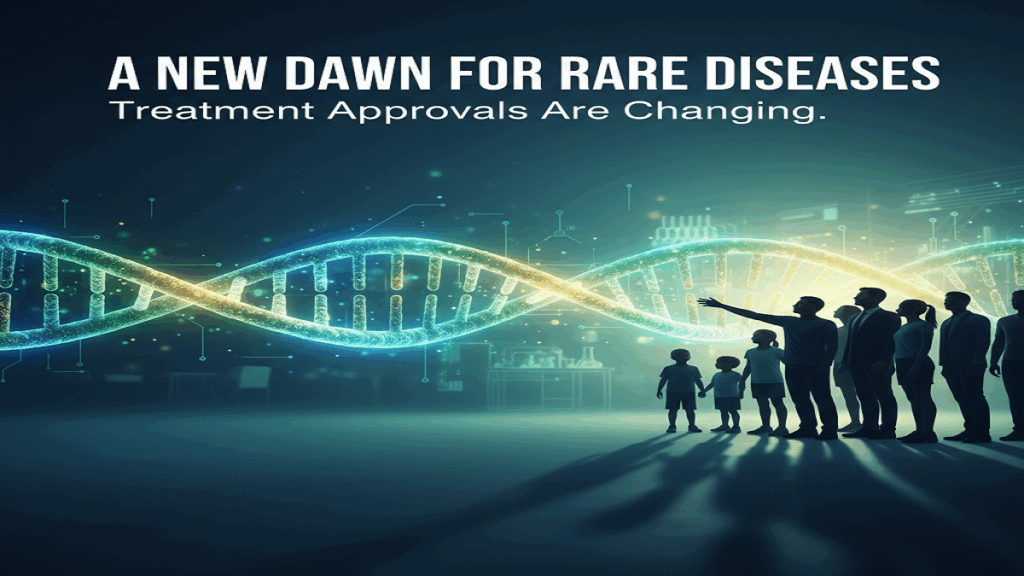
Treatments for rare diseases, the ones that affect less than 200,000 people in the US, are changing fast. Advances in science, rules, and tech are speeding up the approval of important medicines. They are also changing what counts as good proof for these small groups of patients.
A look back: How the Orphan Drug Act helped
Treating rare diseases used to be really tough. Drug companies didn’t have much reason to work on them, so they were called orphan drugs. But things started to change in 1983 with the Orphan Drug Act (ODA).

The ODA gave drug companies reasons to create these drugs, like tax cuts for research and the right to be the only seller for seven years after approval. Before the ODA, only a few drugs were approved for these diseases. Now, hundreds have been approved, which shows how much the law helped.
The European Union did something like it in 2000. They offered same benefits and helped rare disease research around the world. These laws pushed things forward, turning almost no investment into a growing, but still tough, part of the drug industry.
What’s happening now: Being flexible, using genomics, and finding new ways
Today, things are changing due to science, especially in fixing diseases at the gene and cell level, and because regulators are willing to be more open about what counts as proof.

1. Gene and cell ways to fix diseases are a big deal.
A main scientific change is happening in gene medicines. Many rare diseases are caused by a problem with just one gene. New treatments, like fixing or replacing genes, are turning from just managing symptoms to fixing the bigger problem. This offers the chance for treatments that work after just one time.
For example, the FDA recently gave fast approval to FORZINITY™ (elamipretide HCl), which is the first treatment for Barth syndrome. Barth syndrome a very rare disease caused by genes that get worse over time and messes with how cells make energy. After years of work between the company and the FDA, this approval shows that treatments focused on cells’ energy systems can do a lot of good.
2. Regulators are being more flexible and giving new advice.
Regulators know that it’s hard to do big, controlled studies for diseases with very few patients who live far away from each other. So, they’re creating new ways to approve treatments.
The FDA’s new Rare Disease Evidence standards (RDEP) shows this change. RDEP wants to give simpler advice on what kind of proof can be used to show that treatments for very rare diseases (usually less than 1,000 patients in the US) caused by a known gene problem work. Here’s how a treatment can get approved under RDEP:
- Have one good study (or even just one group of patients).
- Have good supporting proof, like lab data, info on how the drug affects the body, and data from watching the disease over time or from giving people the option to use the drug early.
This puts the importance on data from labs and real-world use. It also moves away from study numbers and toward a full view of how well a treatment works when it’s tough to treat.
3. How patients are helping
Patient groups are becoming strong partners in creating and approving treatments. They help raise money, set up studies to track the disease, and make sure that what patients say about their health and quality of life matters when designing studies. Their hard work provides regulators with the data and real-life views they need to be flexible.
What experts think: Balancing speed, care, and access
Experts generally like this new way of making rules, but they warn that it’s still important to make sure the science is good.
Dr. Hilary Vernon, a professor of genetic medicine at Johns Hopkins University School of Medicine, said that the approval of new treatments offers hope to pay attention to other very rare diseases. This shows that doctors and researchers are becoming more hopeful.
Some people in the drug industry aren’t so sure if new systems like RDEP will make a big difference. They say that many of the study plans mentioned like studies with just one group of patients are sometimes used for gene ways to fix a problem. They key is whether the rules lead to more real results and more reliable process.
One problem for the future is getting the drugs to people and making them cheap. Many new rare disease treatments, especially gene ways to fix a problem, cost millions of dollars, which makes it hard to get them to people around the world. Experts say that without new paying systems and teamwork on prices, the scientific steps may not mean that everyone can get these treatments. The goal needs to be making sure new drugs are cheap and available.
What this means for the future
These recent moves have meanings for patients and the drug industry.
- For patients: The important meaning is hope. Treatments are being approved for diseases that didn’t have any, which offers the chance to slow down, stop, or even make damaging conditions feel better. The focus on RDEP and studies with just one group of patients means patients may not have to wait years for a study that can be hard to do in the first place.
- For drug companies: RDEP makes it clear what needs to be done, which makes treatments for very rare diseases a little less risky. This clear path, along with the ODA’s points, will likely get more investment from both small and big drug companies, growing the rare disease options out there.
- For regulators: The FDA and European Medicines Agency (EMA) are getting better at being flexible and looking to the future. Their move toward accepting different types of proof is a good example for how treatments that are made for a person, even for common conditions, might be approved in the future. Teamwork around the world, like the EMA/FDA group for sharing what they’ve learned on rare disease drug development, will be even more important to avoid mistakes when approving.
To sum up, the time when ‘orphan’ patients were forgotten is almost through. This change is thanks to leaps in genomics and big changes to drug rules. The road to treatment approval for rare diseases is getting shorter. This all means a future where new, life-changing treatments reach those who need them most, quicker.