

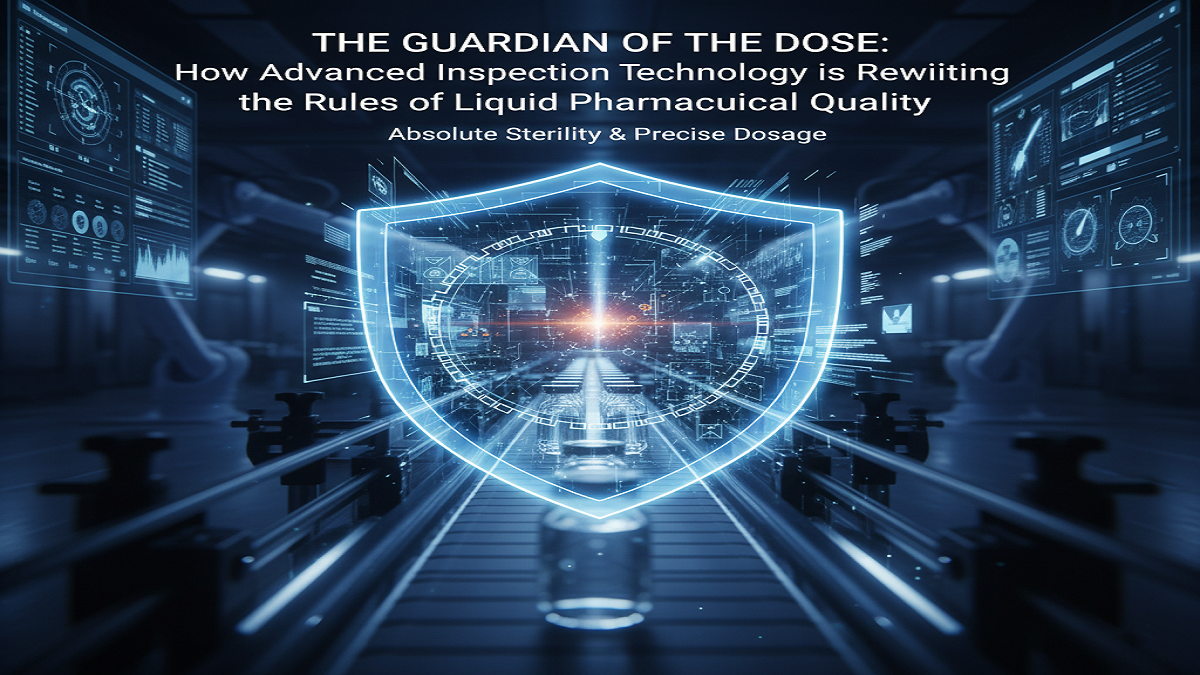
The liquid pharmaceutical industry, responsible for life-saving injectables, vaccines, and biologics, operates under an uncompromising mandate: absolute sterility and precise dosage. Today, this mandate is being enforced not just by human eyes, but by a new generation of hyper-sensitive, intelligent inspection technologies that are the final, non-negotiable gatekeepers of drug safety. Product inspection has evolved from a simple quality check to a critical, data-driven unit operation that directly drives quality, patient safety, and regulatory compliance.
Background and Historical Context: The Wake-Up Call
The history of pharmaceutical quality control is one forged in tragedy. Early 20th-century drug disasters, such as the 1937 Elixir Sulfanilamide incident—where a toxic solvent (diethylene glycol) was used in a liquid preparation, killing over 100 people—highlighted the urgent need for pre-market safety testing. This led to the 1938 Federal Food, Drug, and Cosmetic Act in the US and, later, the formalisation of Good Manufacturing Practices (GMP) globally.
For sterile liquid products, like injectables, the focus zeroed in on particulate matter and container closure integrity (CCI). Historically, inspection was a manual, 100% visual inspection (VI) process, where trained human operators scrutinized every vial and ampoule under specific lighting. While mandatory, this process was inherently limited by human fatigue, subjectivity, and variability. A pivotal moment came with the widespread adoption of Automated Visual Inspection (AVI) systems in the late 20th and early 21st centuries, aiming to deliver objective, high-speed scrutiny to match increasing production volumes.
The Core Mechanisms: Three Pillars of Modern Inspection
Modern product inspection in liquid pharmaceuticals is a multi-technology process that goes far beyond simply looking for particles. It focuses on three critical quality attributes (CQAs):
- Container Closure Integrity (CCI)
- The Problem: A micro-leak in a vial compromises sterility, allowing microbial contamination.
- The Technology: High-Voltage Leak Detection (HVLD) uses an electric current to detect pinholes in non-conductive containers (like glass vials) filled with conductive liquid. Headspace Oxygen Analysis (HSOA) uses laser spectroscopy to measure oxygen levels inside the sealed container, a proxy for package integrity and shelf-life stability.
- Dosage and Completeness Control
- The Problem: Under- or over-filling impacts therapeutic efficacy and patient safety; missing components (like instruction leaflets) risk non-compliance.
- The Technology: Precision Checkweighers utilizing Electro-Magnetic Force Restoration (EMFR) load cells can detect minute weight variances caused by over- or under-fill errors and ensure all components (vial, label, leaflet) are present without slowing down high-speed lines.
- Contamination and Particulate Matter
- The Problem: Foreign particles (glass, fibre, metal, product aggregates) can cause embolisms or adverse reactions when injected.
- The Technology: Automated Visual Inspection (AVI) systems use high-resolution cameras, controlled lighting, and a rotation mechanism to detect minute particles, cracks, and cosmetic defects. X-ray inspection provides a non-destructive method to detect dense foreign objects like metal or glass fragments within the liquid or container structure itself.
Current and Upcoming Trends: The AI Revolution
The current trajectory of product inspection is defined by automation, integration, and intelligence. The global pharmaceutical inspection machines market is projected for significant growth, driven by the demand for 100% precision in biologics and next-generation therapies.
| Trend | Technology | Implication for Quality |
| Artificial Intelligence (AI) & Machine Learning (ML) | Deep Learning AVI: Algorithms are trained on massive datasets of ‘good’ and ‘defective’ images. | Reduced False Rejects: AI can differentiate between non-defect anomalies (e.g., product bubbles) and genuine critical particulate matter with higher accuracy than traditional rule-based systems, increasing throughput and lowering waste. |
| Integrated Multi-Technology Systems | Single machine combining AVI, HVLD, and Serialization/Track & Trace. | Holistic Quality Assurance: Ensures integrity, content, and traceability in one step, creating a single, comprehensive electronic audit trail that meets FDA 21 CFR Part 11 requirements. |
| Serialization & Aggregation | Vision systems reading unique data matrix codes on individual units, bundles, and cartons. | Anti-Counterfeiting & Traceability: Makes products digitally traceable across the supply chain, a mandatory compliance requirement in major markets (e.g., US DSCSA), ensuring the product reaching the patient is authentic. |
| In-Line Spectroscopy | Near-Infrared (NIR) or Raman Spectroscopy integrated into the line. | Real-Time Formulation Verification: Non-destructively verifies the chemical identity and concentration of the drug within the container, moving quality control closer to Real-Time Release Testing (RTRT). |
Expert Opinions and Implications
The shift from manual scrutiny to intelligent automation is fundamentally changing the role of quality control.
Dr. Alistair Grant, a regulatory compliance expert, notes: “The greatest value of AI is not just its speed, but its ability to enforce a standardized, non-probabilistic level of quality. Manual inspection is inherently statistical; AI strives for deterministic perfection. For the complex, highly sensitive biologics and cell and gene therapies being developed today, that level of certainty is a prerequisite.”
The implications of this technological push are broad and transformative:
- Improved Patient Safety: The most critical implication is the near-elimination of critical defects (e.g., particulate matter, compromised sterility) reaching the patient, safeguarding public health and preventing recalls.
- Regulatory Alignment: Advanced inspection systems produce robust, continuous data that demonstrates a “state of control” over the manufacturing process, making it easier for manufacturers to meet increasingly stringent GMP and data integrity requirements from agencies like the FDA and EMA.
- Economic Efficiency: By reducing false rejects (rejecting good product) and preventing late-stage recalls, advanced inspection dramatically reduces waste and operational costs, a direct realisation of W. Edwards Deming’s chain reaction: Reduce Variability→Improve Quality→Decrease Costs.
In essence, product inspection in liquid pharmaceuticals is no longer a necessary evil; it is a competitive differentiator and the backbone of the industry’s commitment to patient trust. The future of the injectable drug relies on the microscopic precision of the machine eye, ensuring that every dose is, without question, safe and effective.